A Doctor’s POV on Matcha
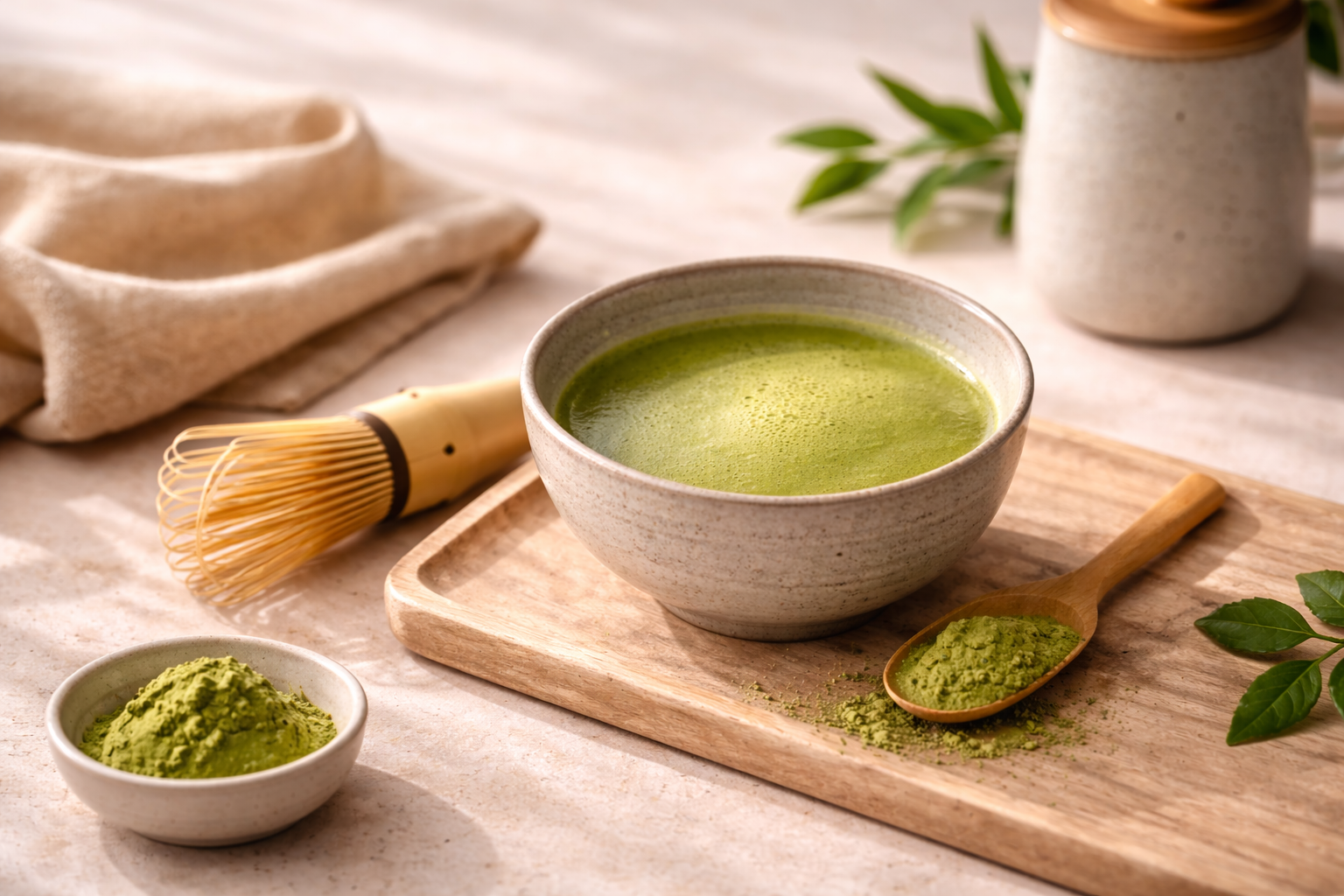
Matcha is more than you think you know. When you drink matcha, you are consuming the entire tea leaf in powdered form — which means you get its naturally occurring caffeine, L-theanine and catechins, including the powerful antioxidant EGCG.
And this combination is what makes matcha scientifically interesting.
One of the most fascinating compounds in matcha is L-theanine.
Your brain is constantly producing different patterns of electrical activity, often described as brain waves. Beta waves are generally associated with active thinking and concentration, while ALPHA waves are associated with a relaxed yet awake state.
Research has found that L-theanine can increase alpha-wave activity in the brain — essentially a pattern associated with being relaxed without feeling sleepy. Some research has also found changes in stress-related measures such as cortisol. (PubMed)
This is one reason the combination of L-theanine + caffeine in tea is so interesting: caffeine supports alertness, while L-theanine may help create a calmer state of focus.
EGCG: The Cell Protector
Then comes EGCG — epigallocatechin gallate — one of the most studied antioxidants in green tea.
Think of your cells as constantly working in an environment where normal metabolism and everyday exposure to things like pollution and UV radiation can create oxidative stress.
Antioxidants such as the catechins found in green tea can help counter this oxidative stress by interacting with free radicals and other reactive molecules.
Why does this matter?
Because oxidative stress can damage important components of cells, including proteins, fats and DNA. By helping the body manage this stress, EGCG is being studied for its potential role in supporting cellular health and protecting cells from oxidative damage.
And the skin is made of cells too.
Green-tea polyphenols, including EGCG, have been studied for their ability to help protect skin from oxidative and UV-related stress and to influence pathways involved in inflammation and skin ageing. (EatingWell)
So while matcha isn’t a magic anti-ageing treatment — and definitely isn’t a replacement for sunscreen — its antioxidant profile makes it an interesting addition to a healthy diet.
So, Why Matcha?
From a doctor’s perspective, the beauty of matcha isn’t one miraculous ingredient.
It is the combination:
Caffeine → supports alertness
L-theanine → associated with relaxation and focused attention
EGCG & catechins → antioxidant support for the body’s cells
The ritual → a simple moment to slow down and be present
Matcha isn’t medicine. But it is a fascinating example of how something as simple as a cup of tea can bring together compounds that interact with both the brain and the body.
And that, to me, is what makes matcha extraordinary.
WHAT ARE YOU LOOKING FOR?